States of Power How to Win Your First War
Win your first war in States of Power: division composition, terrain advantage, supply line discipline, and when to negotiate.
Why Most First Wars Are Lost
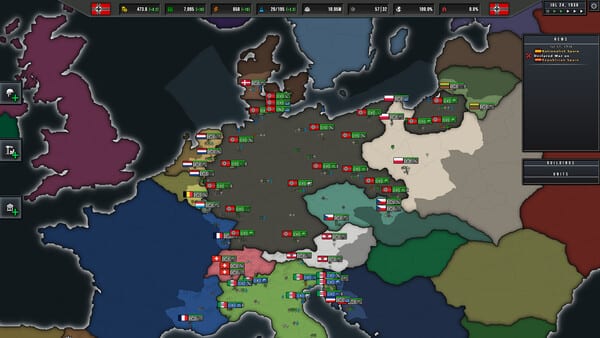
The single biggest reason new players lose their first war in States of Power is attempting to fight on too many fronts simultaneously. Germany opening a two-front war against both France and the Soviet Union before securing Western Europe is a classic example of overextension. The second major cause is neglecting supply lines — attacking deep into enemy territory while your logistics chain remains unsecured.
Division Composition for Offense
A balanced offensive force in the early game consists of three infantry divisions supported by one artillery division. Infantry provides the body count and holding power; artillery delivers the damage multiplier that breaks entrenched defenders. Never send infantry alone against a well-defended position — the attacker always takes higher casualties, so you need overwhelming local superiority before committing.
As the war progresses and you unlock tanks and fighter aircraft, your composition should evolve. A mid-game offensive division might combine two tank battalions with one motorised infantry and one anti-aircraft unit for protection against enemy planes.
Terrain and Positioning
Never assault a province defended by a river line or mountain range unless you have at least a three-to-one local numerical advantage. The defender’s terrain modifier is severe — attacking across the Danube or through the Alps against a prepared defender is a guaranteed casualty sink.
Instead, identify the weakest point in the enemy line — usually a section held by a minor nation with fewer divisions — and concentrate your strike force there. Break through, then wheel your divisions to envelope stronger positions from the rear. Encirclement is far more effective than a direct frontal assault.
Supply Line Discipline
Before every offensive operation, verify that the target province connects back to at least one of your supply depots through owned or allied territory. A division deep in enemy land without supply becomes combat-ineffective within a few days, losing organisation rapidly and eventually routing.
Use the logistics map overlay (press L) to visualise your supply network before launching any attack. If the path is interrupted, build a supply depot in a forward province before pushing further.
Knowing When to Negotiate
Wars in States of Power are not always about total conquest. If you have achieved your primary territorial objective and the enemy is offering reasonable peace terms, accepting can save you from a prolonged attritional grind that drains your economy. The goal is to win on your terms, not to fight until every last division is destroyed.
Defensive Warfare
When playing defensively, the same principles of terrain, supply, and local superiority apply in reverse. Position forces on defensible terrain — rivers, mountains, forests — to amplify the defender’s advantage. Use propaganda to reduce war exhaustion while your opponent bleeds manpower and equipment in failed assaults. A well-defended river line or mountain pass can hold against far superior forces indefinitely, bleeding the attacker white while you build reserves for a counteroffensive.
Frequently Asked Questions
Quick answers to the most common questions about States of Power.
How many divisions do I need to invade a major power?
For a major power like the Soviet Union or United States, you need at least 20 to 30 well-equipped divisions with proper supply lines. Attacking with fewer is possible but requires exceptional timing and exploiting a distracted enemy.
Should I build military factories before or after going to war?
Before. Aim to have at least five military factories running before you declare war on a significant neighbour. Each factory produces enough equipment to sustain approximately three infantry divisions.
What is the best time to declare war?
The optimal moment is when your economy is running a surplus, you have at least ten divisions equipped, and your potential enemy is engaged in conflict elsewhere. Check the diplomatic situation before committing.