States of Power Multiplayer Guide
Dominate States of Power multiplayer: diplomatic deception, alliance breaking, and competitive PvP against real opponents.
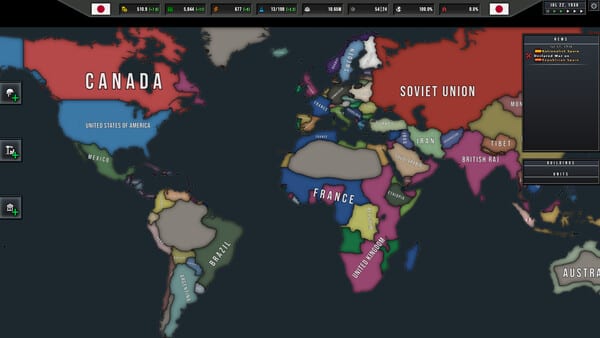
The Fundamental Difference: Human Opponents
Multiplayer in States of Power is fundamentally different from fighting AI. Human opponents adapt, deceive, and respond to your moves in real time. An AI that mindlessly guards its border can be easily exploited. A human who suspects a feint will reposition their reserves and punish your real attack.
This means multiplayer demands a different mindset: you must think about what your opponents believe about your intentions, not just where your divisions are physically positioned.
Opening Diplomacy
The first 30 minutes of a multiplayer session are spent in diplomacy, not combat. Every player is assessing every other player’s strength, territory, and likely intentions. This is the moment to establish alliances — or to plant the seeds of future betrayal.
A common effective opening is to guarantee the independence of a smaller nation bordering a stronger neighbour. This costs you almost nothing immediately but creates a diplomatic obligation that you can invoke later to justify entering a war on friendly terms. It also lets you position troops in strategically useful territory without triggering a declaration of war.
The Art of Deception
The most effective multiplayer players maintain ambiguity about their true intentions for as long as possible. Moving divisions toward a border can mean an attack is coming — or it can be a defensive repositioning. The uncertainty forces opponents to split their attention and divide their forces.
Simultaneously, always assume that other players are attempting the same deception against you. A sudden diplomatic warming can be genuine — or it can be an attempt to lower your guard before a surprise attack.
Breaking Alliances
Betrayal is a core feature of the multiplayer meta. Alliances in States of Power are agreements of convenience, not friendships. The optimal time to break an alliance is when doing so gives you a decisive advantage — usually when your former ally is deeply committed to a war on another front.
Before betraying an ally, ensure you can withstand the diplomatic fallout. Other players will remember betrayal and may form coalitions against you in future sessions. The multiplayer community is relatively small, and your reputation travels with you.
Resource Denial and Economic Warfare
Beyond military confrontation, economic warfare is highly effective in multiplayer. If a rival is building up their military industry, disrupting their supply of critical resources through world market manipulation or direct action against trade routes can cripple their war effort without firing a shot.
Communication
The in-game messaging system supports both global and private messages. Use private messages to coordinate with allies without revealing your plans to the wider lobby. Use global messages to spread disinformation or make public accusations that distract other players from your real activities.
Communication is a weapon. Use it precisely.
Frequently Asked Questions
Quick answers to the most common questions about States of Power.
How do I find multiplayer games of States of Power?
The Steam community hub for States of Power is the primary venue for finding multiplayer matches. Join the official Discord (discord.gg/YVZSkSg9TQ) to organise games with other players. The Scenario Browser in the main menu also sometimes features multiplayer-enabled custom scenarios.
What happens if my internet connection drops during a multiplayer game?
States of Power saves your game state continuously. Reconnecting to a multiplayer session should restore you to your exact previous state. Check the Steam community for specific server handling details, as host settings determine reconnection policy.
Can I play multiplayer with fewer than the maximum number of players?
Yes. Most multiplayer sessions start with open slots and allow players to join or leave mid-game. The game scales difficulty with the number of active human players, so a two-player session will face a different AI opposition density than an eight-player game.